
The Physics and Chemistry of the Interstellar Medium
Msc and BSc course, Goethe-University Frankfurt, IAP, 2026
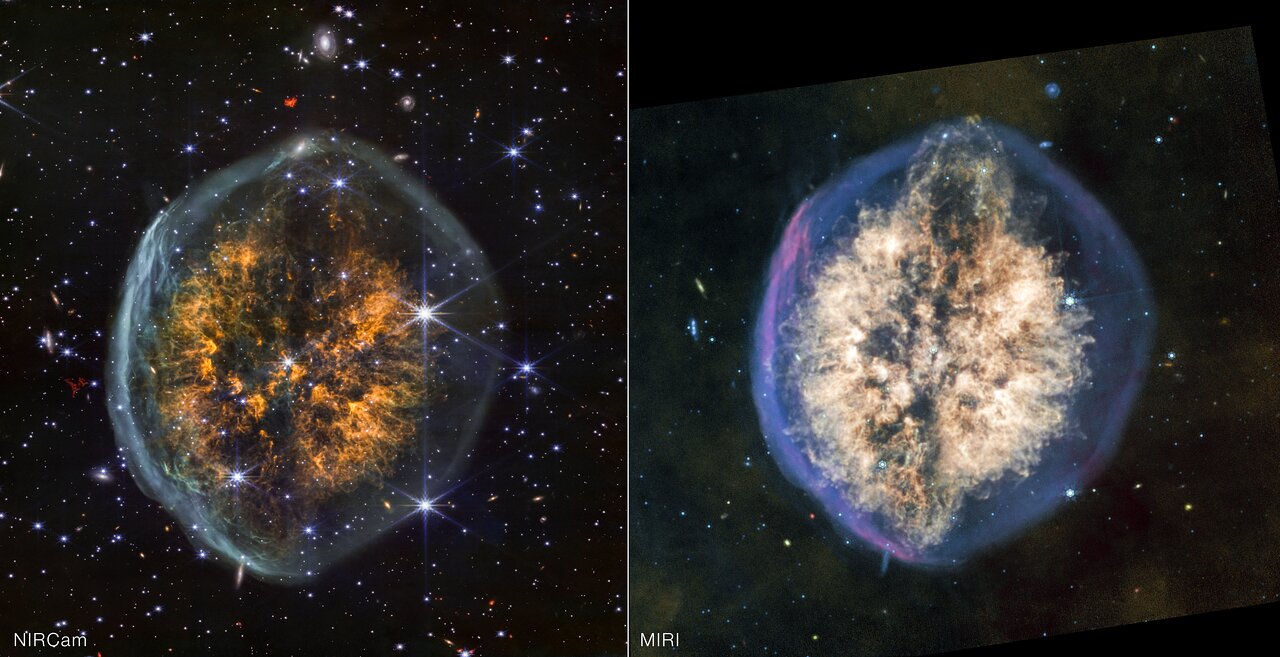
🌌 Course Overview / Kursüberblick
🇬🇧 English: The space between the stars is far from empty. It is filled with a dilute mixture of gas and dust — the Interstellar Medium (ISM). This course provides a comprehensive introduction to the physical and chemical processes that govern the ISM, driving the evolution of galaxies and the birth of new stars. We will cover interstellar gas dynamics, hydrodynamical instabilities, turbulence, energy balance, and the complex astrochemistry of atoms and molecules in space.
🇩🇪 Deutsch: Der Raum zwischen den Sternen ist alles andere als leer. Er ist gefüllt mit einer verdünnten Mischung aus Gas und Staub – dem Interstellaren Medium (ISM). Dieser Kurs bietet eine umfassende Einführung in die physikalischen und chemischen Prozesse, die das ISM beherrschen, die Entwicklung von Galaxien vorantreiben und die Geburtsstätte neuer Sterne bilden. Wir behandeln die Dynamik des interstellaren Gases, hydrodynamische Instabilitäten, Turbulenz, das Energiegleichgewicht sowie die komplexe Astrochemie von Atomen und Molekülen im Weltraum.
🎓 Organization / Organisation
- Language / Sprache: * Vorlesungssprache ist regulär Deutsch, auf Anfrage Englisch. (The lecture is generally taught in German, but can be held in English upon request.)
- Das Vorlesungsskript und die Folien werden in Englisch bereitgestellt. (Lecture scripts and slides are provided in English.)
- Evaluation / Leistungsnachweis: -Studienleistungen gemäß Studienordnung Physik (unbenotet/benotet) durch aktive Mitarbeit zu ausgewählten Themen, die im Lauf der Vorlesung gehalten werden.
- Course credit is awarded based on active contributions on selected topics given during the semester.
- Time & Location / Zeit & Ort:
- Dienstag, 12:00 c.t. (Tuesday, 12:00 c.t.)
- Raum: Physik - Phys 02.201a
- Syllabus / Lehrplan:
📅 Syllabus & Materials / Lehrplan & Unterlagen
Hier werden die aktuellen Skripte, Vorlesungsfolien und Videoaufzeichnungen thematisch sortiert zur Verfügung gestellt.
| Lecture | Topic / Thema | Materials / Unterlagen |
|---|---|---|
| Lecture 1 | Introduction Overview and History | 📄 Lecture notes 1 (annotated) |
| Lecture 2 | The dynamics of the interstellar gas Hydrodynamics | 📄 Lecture notes 2 (annotated) |
| Lecture 3 | The dynamics of the interstellar gas Magneto-Hydrodynamics | 📄 Lecture notes 3 (annotated) |
| Lecture 4 | The dynamics of the interstellar gas Instabilities, effects of magnetic fields, turbulence | 📄 Lecture notes 4(annotated) |
| Lecture 5 | Radiation from interstellar gas Line transitions I | [📄 Lecture notes 5(annotated)] (/files/pdf/teaching/ism_2026/Lecture_5 annotated.pdf) |
| Lecture 6 | Radiation from interstellar gas Line transitions II | [📄 Lecture notes 6(annotated)] (/files/pdf/teaching/ism_2026/Lecture_6 annotated.pdf) |
| Lecture 7 | Radiation from interstellar gas Summary of radiative transfer | [📄 Lecture notes 7(annotated)] (/files/pdf/teaching/ism_2026/Lecture_7 annotated.pdf) |
📚 Recommended Literature / Literatur
- B.T. Draine: Physics of the Interstellar and Intergalactic Medium
- A.G.G.M. Tielens: The Physics and Chemistry of the Interstellar Medium
- M. Barthelmann: Theoretical Astrophysics
- K. Lang: Astrophysical Formulae
Research Note: Auf Quellenangaben, die während der Vorlesung auftauchen, kann elektronisch über den SAO/NASA Astrophysics Data System Abstract Service (ADS) zugegriffen werden. (Aus dem Uni-Netz oder via VPN sind auch neuere Artikel voll zugänglich).
🔭 Praxisbezug: Beobachtung und Vermittlung
Als exzellente praktische Ergänzung zu den hochspannenden, aber oft sehr theoretischen Inhalten am IAP bietet sich für Studierende ein Besuch oder sogar ein Engagement beim Physikalischen Verein in Frankfurt an.
Dort lässt sich die Brücke zwischen der theoretischen Astrophysik des interstellaren Mediums und der echten astronomischen Beobachtung schlagen – sei es bei den öffentlichen Himmelsbeobachtungen oder im regen Austausch mit anderen Astronomie-Begeisterten.